Wednesday, January 14, 2015

The Brahma temple at Pushkar

Pushkar is one of the few temples in the country dedicated to Lord Brahma, the creator. Some say there are two, some say four, but apparently it is described in the scriptures as being the only one.

The temple dates back to the 14th century, but is believed to be over 2000 years old. For the enormity of the number, and prominence of being the only Brahma temple, it’s a temple which is still really small and pretty, and has been allowed to remain at original size.

That's the whole of the temple
It makes one curious how religion has evolved to focus on the other deities of the trinity, and the million other gods of the hindu pantheon, with even minor gods having multiple temples, but the creator has only this one, or at best the two or four temples, which are also from the 1st millenium.

Apparently the Tirth Yatra , the main Hindu pilgrimage, as described in the Mahabharata, starts from this Brahma temple, which was considered highly auspicious and important in the 1st millenium. But today it's more of a tourist spot than a revered temple, which made the visit very peaceful, but also made me wonder..... Is it because the task of creation is considered complete, that praying is now directed only to the preserver (Vishnu) and the destroyer (Shiva) ? Wonder what happens to being grateful....

The Pushkar Ghats

A small temple in the middle of the lake
The pushkar sarovar, which is the lake associated with the temple is considered extremely holy and has the typical pilgrimage feel to it. The holy dips, the cows, the monkeys et al.

The lake is surrounded by the Aravalli Hills on three sides and is extremely picturesque. It is surrounded by 52 bathing ghats (stone steps that descend into the lake for the holy dip). There is one ghat named Gandhi ghat, as Mahatma Gandhi's ashes were immersed in this lake. A dip in the lake is believed to cleanse one of all sins and skin diseases as well.

There's a story from the ninth century of a Rajput king who came across the lake while on a hunting expedition, and in order to quench his thirst he dipped his hands into the lake, and the leucoderma marks on his hands disappeared. To enable others access to the curative powers of the lake he had the lake restored to its original glory.

Janak Singh, our cab driver in conversation with a sadhu
A camel in Rajasthani attire
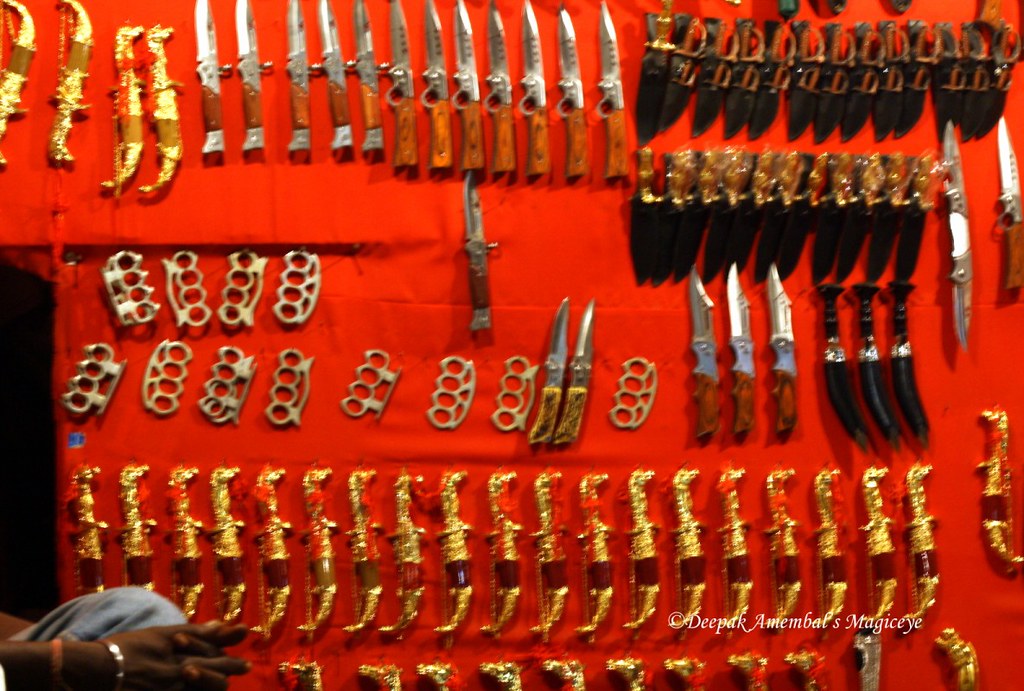
And pushkar has a real interesting footpath market; loads of funky clothes, junk jewellery, silver trinkets, glitzy bags......the chadaus, swords and knives add the rajasthani touch .....mehendi and hair braiding on the street....real fun stuff



And after all that walking and shopping, we had the best ever nimbu soda and jaljeera from this bandi !


Tuesday, January 13, 2015

Visit to Ajmer

A magical two day trip to Ajmer, Pushkar and Jaipur. I say magical, because everything about it was. The way it came about, the trip itself, the place, the feel.

Ajmer, or Ajmer Sherif as it's more popularly known, is a Dargah, a sufi shrine. It is one of India's most important Muslim pilgrimage centers, with the shrine being the maqbara (grave) of the saint Moinuddin Chishti, also known as Khwaja Gharibnawaz, dating around 500 AD.

Ajmer itself is a small and beautiful city, geographically nestled in the rugged Aravalli Hills and developed around a pretty lake, Ana Sagar.

The lake, the city and the Aravalli Hills

The Dargah

Once you get to the place, it's a further two kilometer walk to the Dargah itself, and we took some by lanes which took us through some of the narrowest and most intriguing lanes I've seen, and bonus was seeing donkeys in there too. (I think they're really cute).

The real narrow bylanes we took to the Dargah

And donkeys in those bylanes, sadly as beasts of burden too

The main street leading into the Dargah

The shop where I bought a taveez, as memoir of the trip

I wanted to have the whole experience, so at the dargah we did the traditional 'chaadar chadana'. This is a ritual of dedicating a brightly coloured, and beautifully embroidered chaadar (a large bedsheet...ours was bright red with golden embroidery), along with a basket of roses and attar (a natural concentrated perfumed oil). And that whole sequence was a really interesting and intense experience; next to the maqbara, the priest puts the chaadar over our head like a tent, and he''s guiding our thoughts, and it feels almost like it enables a conversation with the spirit of the place. Like Sagari said, I wished he'd let us stay in there a while longer. 

The religious fervor of the place also get to you, as you see people in a trance, some singing, some crying and it's just very intense; an experience worth having if you're upto it. And considering women are not allowed in a masjid, this was the closest we could get to a muslim religious experience.

An added factor; Sagari had sufi music playing through the three hour journey from Jaipur to Ajmer, though she didn't know earlier that we were doing a Sufi Shrine, and it just added to the whole aura of the experience.

To me it was also this whole feeling of .....'it was meant to be', to add to the magical element of it.

Ajmer has been one place I’ve been wanting to visit for a few years now, one of those just pushed to the back of the mind kind of things. Towards the end of december, when I’d gotten down to my new year resolution list, one of them was ‘make a trip each quarter, and at least two new places to be seen in the year'. As I wrote this one, I just saw the thought of Ajmer flash through the mind, must have been the subconscious mind throwing it out there.

And then, a day later I’m doing this casual, what’s up kind of chat with a friend and it so turns out that this friend is going to Jaipur in two weeks and the friend who she was supposed to go with had backed out and stuff and somehow, within ten minutes of the conversation, I had my tickets booked. One of the more impulsive decisions of recent past. And if I think about it, over that two weeks there were a lot of other things that fell in place to enable the trip to happen.

What it told me is that wanting something and letting it marinate in the subconscious is one thing, but articulation and awareness can get things moving at an altogether different pace if you’re up for it. :)

Thursday, January 8, 2015

Micro Finance - A perspective on what went wrong

                          
                                Micro Finance; trusting in women, their hard work and integrity

This afternoon we had Tony Sheldon, Executive Director, Yale University, visit SELCO. He is an expert on Micro Finance and Social Entrepreneurship and has made SELCO a case study for sustainable social entrepreneurship at Yale. 

In under an hour, I got this brilliant perspective of what happened to the world of Micro Finance globally and especially in Andhra Pradesh. This was a question which was bothering me for quite a while now, and the story was fascinating enough for me to want to put in here. 

After all, we saw Mohammud Yunus get the Nobel peace Prize for his work in Micro Finance, and there were so many wonderful success stories in the world of micro finance in Hyderabad itself. They were doing so much good work, helping so many of the poor, and suddenly it all changed......to the extent that micro finance became a bad word. It really bothered me.

For those who are not too familiar, MFIs, micro finance institutions are private sector organizations that lend , typically small sums of money to the very poor who do not otherwise have access to the formal banking and credit industry. There are different models of lending, some based only on productive enterprise, like micro and mini businesses, some for life cycle needs like weddings, funerals, education, sickness and so on. Some models lent to individuals, some only to groups. Some did it at 20% pa interest, and some even at 100% pa, but the basis was that it was a tool to reduce poverty.

In 1990s and 2000s this became an industry, when it was realized that one could lend to the poor profitably, you can do good and do well at the same time. Now this is a positive thing, but when the focus shifted from the doing good to expecting hockey stick growth in terms of financial returns, when it moved to making money, huge money off the poor is when trouble started to brew.

This company called Compartamos  ('lets share' in Spanish) in Mexico was doing so well in micro finance, that it was showing a return on equity of 50% and more, and this attracted the really high stake financial global investors. They did the first IPO of an MFI, and they did so brilliantly well, made so much money at the IPO, that the big investors now started to look for potential MFI markets, typically developing countries, and that’s how India and AP came into the big league in Micro Finance. Especially SKS which had over a million clients. Lots of money got pumped in, lots of people got very rich and the industry hadn’t yet learnt how to handle it, and that’s where the trouble started. The market got quickly saturated,  as the focus stayed within AP and the same people were given multiple loans, murky things started to happen, and the State Government and the Press came down on the MFIs. Regulations were strapped in and the industry collapsed. Pretty much like the mortgage bubble that hit the US economy a few years ago. 

Apparently, this had global impact, with the MFI industry in Nicaragua, Bolivia, Bosnia and several other countries, all also imploding. There are books written on it, but that's the story in a nutshell.

Luckily the industry is on a recovery path, and we're back to seeing a whole lot of micro finance institutions, but long as the people behind it keep the focus on poverty alleviation and not high stake financial returns, they can still do both, do good and do well. Lets hope they do.

Sunday, January 4, 2015

What is NEWS doing to you?

The TV and the Newspaper are such an integral part of life;  a lot of us are pretty hooked. Can’t start the day without the newspaper and the early cup of filter coffee, was something I was stuck in for a long long time. That somehow broke. 

This morning, when I saw the growing pile of not read newspapers, I decided to do a focused quick browse of at least headlines, as the guilt ( perceived guilt for not doing what I believed was the right way to start the day) got the better of me. With each days paper covered, I found myself getting dragged into more and more disturbed space. 

Would I need to explain? Would you wonder why? No, I’m sure we’re all aware of just how negative that space is becoming, terrorism, accidents, crime, rape, violence, corruption and on. It’s not as much about the world getting worse, people becoming worse…no, it’s about what sells. It’s the sensationalizing of the dirt and grime, and somewhere people getting mesmerized and dragged in by the negative. If economics over the years has instilled in us that we need consumerism and materialism to be happy, the media today seems to be telling us that the world is by and large a big bad place.

It's what we start the day with, and maybe even end the day with. After all TV, is an even more graphic and loud image of the same horrible negative news. And we are not immune, we are bound to get impacted. We seem to be subjecting ourselves to a lot of unwanted muck through this. (Any news worth knowing will anyways reach you, either from friends, at office wherever).

Is it possible to get into selective reading and not subject ourselves to this stress? Like stay away from the first page, and the second and maybe even the third? Maybe just go on to the Op Ed or Sports which is still great space to be? Yes, but that would need to come from a conscious decision to change, change years of habit.  Choose the positive and the inspiring, dump the negative. I think it's worth trying.

This brings to mind the anecdote of the frog in boiling water:


If you put a frog into a kettle of boiling water, it will immediately leap out.

On the other hand, if you put a frog into a kettle of cold water and gradually heat the water, it just stays in even as the water gets hot...... and even when it starts to boil...... until is even dies. 

Its used as an illustration to show how survival instincts are geared to detect sudden changes, but the same risk fed gradually is not detected. 

Lets try and be more aware of what we expose ourselves to, what we imbibe and more importantly, what we would then be or reflect. Don't let the temperature of the water deceive you :)

Saturday, January 3, 2015

CANI - In Greater Detail

This is for those who kind of got used to longer posts, and came back on CANI with…What was that?  Didn’t understand only….Need elucidation... so here it is.

                                       
                                          The picture's a sidetrack...more as a cute 'Can I?'

To go back to the CANI, Constant and Never Ending Improvement, I read somewhere this analogy of a Movie vs a Speech, which might fit here.

Producers spend crores or millions on a production, create a movie, then put it out, and then wait for public reaction, the outcome...be it success or failure. There's not much they can do once the movie's completed and out there. With a movie, you have one chance to get it right. You either make your money or you lose it.

A speaker, in contrast, gets ample opportunity to improve a speech. With each new speech, you get to try out new ideas or methods, watch the reaction, make changes, test them, and then repeat the process until you have a nicely finished product. In fact, that's not even true. With a speech, you never have a finished product. With each new delivery, you're provided one more opportunity to make improvements.

In life, we somehow seem to develop this life-is-a-movie attitude, maybe because of school. We work on our projects or exam papers, hand it in, and pray for a good grade. It’s about grades at every point, and then we’re moving onto the next project, the next class. There’s no time or opportunity to polish anything done.

Unfortunately, when it comes to producing a noteworthy product, polishing is everything. Just ask professional writers and they'll eagerly tell you, 'Writing is rewriting'

Now, Life is like a speech, not a movie. We're almost always given a chance to rework our projects. A chance to continuously improve on what we've learnt and what we do. It just takes the awareness and guts and humility to do so.

Apparently, before Woody Allen did his most popular stand up routine on TV,  he had put together ten jokes and tried them out at a local club. One joke survived. Then he tried out ten more and then another ten until he had the 'effortless' set he had before he did TV. Allen understood that he wasn't producing a movie, he was giving a speech—and a speech can be easily tested and improved until the finished product looks effortless.

Understanding this idea gives us perspective, and hope. It frees us from the frightening challenge of 'getting it right the first time', or for that matter even the second or the third. We learn that there's always scope to learn and improve.

In Google I've seen this done with everything, within the Org and also with products. A product is launched in beta version to faithful users for a good while and then built on, and even after launch, iteration and improvement is a constant. I learnt to do that even with regular presentations or project summaries. The first one would always go out as version 1, and from then on its about building on it.

Now this applies not just in what we do, but in how we are too.

We seem to have fairly rigid images of ourselves. Especially when we find ourselves in sticky situations, we like to justify it saying, well, that’s the way I am…Main Aisa Hi Hoon.  What we typically do is.....'that's how I'm made'.... 'that’s the way it is'..... 'that’s how everyone lives'.....Like finished product kinds. But is it?

I'll say it one more time: life is a speech, not a movie. 


Friday, January 2, 2015

How to get and use feedback that really helps

We are all pretty good at giving feedback, ever ready with our advice and get better statements, but really, how many of us are equally good at receiving feedback. There’s tons of reading material and trainings regarding how to give feedback the right way. But to receive it? A totally different ball game and no training whatsoever. Are we naturally good at it? Afraid not :(


First, do we even want feedback? Isn't this about others opinions? And we don't want to be inflicting pain on ourselves based on others opinions? Sure, all true.

Yet, there are places and spaces where it matters to our own objective, to what we want to achieve, to where we want things to be, be they in tasks or in relationships, and those are the ones I'd look at here. We need to be aware of that, so first thing to remember; yes, it is the others opinion, so you pick the opinions based on what you're looking to achieve.

Secondly, it's also not easy to really listen to feedback. There’s typically a reaction of, ‘Yeah, I see what you’re saying but I do this because….duh, duh, duh…..’. Very polite, but very defensive, we’re always ready with the justification for why we behave in that particular way. We tend to shift responsibility off of ourselves. It's a huge challenge to stop that and really listen. 

Thirdly, it's actually hard to get useful feedback. People like to be nice to you, else they're intimidated by the level of honesty expected. So you need to make an effort at convincing them that you're doing this as a serious exercise. A few things you can explicitly convey:

Tell them you're serious about listening, that you don't want them to be just nice
Tell them it's about going forward and not what you did wrong. Makes it easier to say and to listen.
Listen without getting defensive, you're asking for their feedback remember.

Feedback is not disapproval or criticism, and it may be hard to hear the truth but viewed as a tool for improvement, it is very useful to improve our personal impact, communication and interaction skills.

Let’s try and and get that in from those who matter, be it at home, friends or at work. Your area of influence essentially. And from those whose opinion you respect.

Also, keep in mind and pick out the feedback which is actually about you; that's like a trick space.

There could be ones which fall in between ( like a personality difference), like for instance, when I did this exercise with Diksha last year, she said she feels yelled at at times, and that took me so much by surprise, because, I thought I never ever do it. But obviously she's perceiving it, and if my objective is a rational communication at all times, I would need to listen to her, though it's not necessarily about me.

What you do with the feedback, whether you want to do anything at all, discerning which one is about you, which falls in between, which ones needed, all that is next steps; Let’s first get it, listen to it, and then we can always decide 'which' and 'how' to fit in.

You can have your list of questions for the feedback, but if it helps, I've decided to do this exercise with this: 

1. Tell me three things that you think I’m good at and should keep doing.

2. Tell me three things about me which you think need change

If you think you're up for it, try it...... If nothing, it’ll at least be that many interesting conversations :)

Thursday, January 1, 2015

CANI

CANI – Constant and Never Ending Improvement


To me, this came from Google, but apparently this is a Japanese concept, kaizen (Japanese for improvement or change for the better).

Seems simple enough, but viewed and kept as a conscious mindset, its mind blowing in impact. 

I’ve seen it exemplified at Google. Be it in changing processes, products, food, rangolis, anything. It’s a perceptible constant endeavor to identify and implement change for the better. It includes in its ambit those small little changes that eventually add up. When imbibed at a personal level, it makes your journey that much more fascinating.

Happy New Year !